

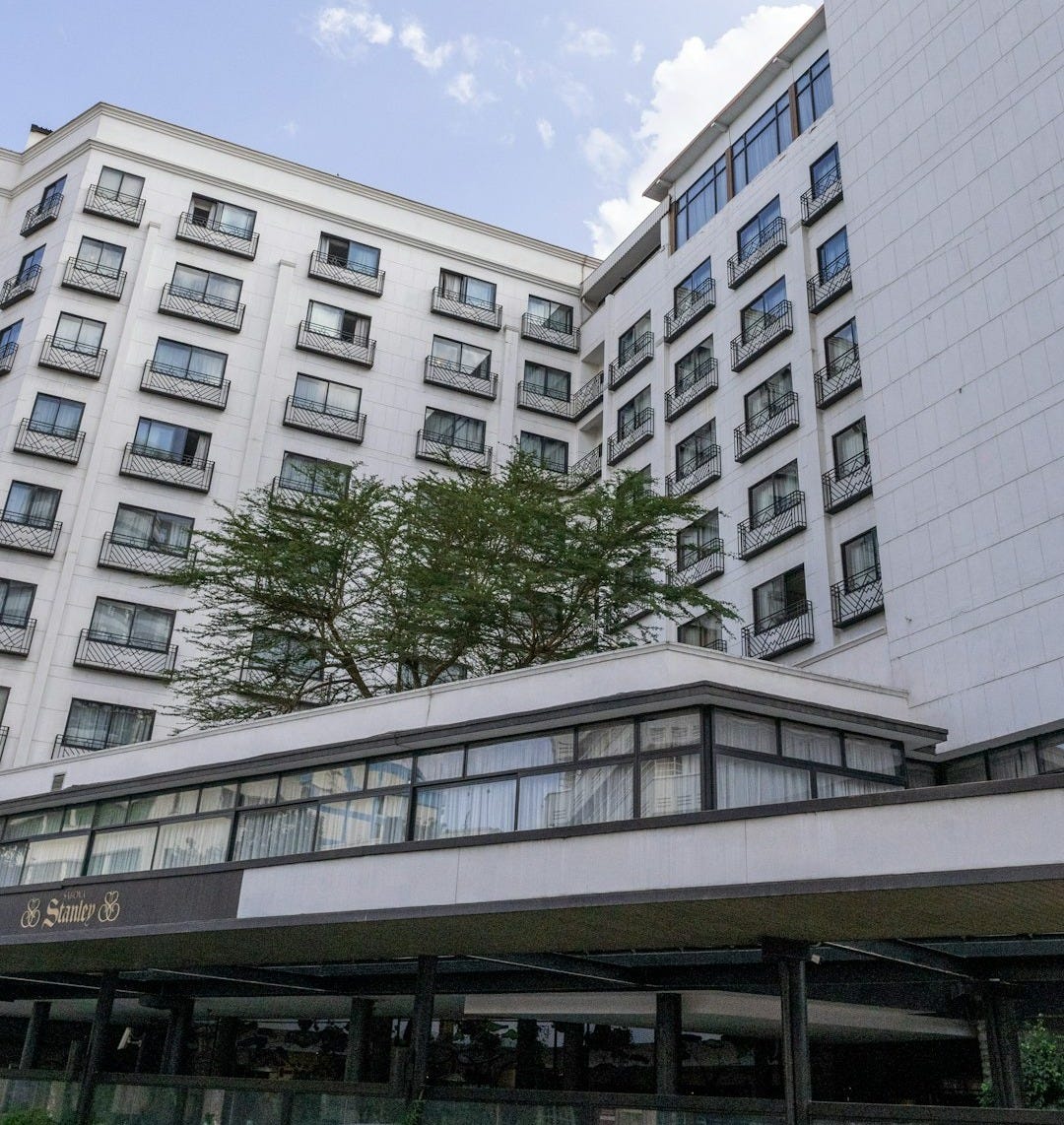
Commercial Property Assessed Clean Energy (C-PACE) financing lets owners finance qualifying energy, water and resilience upgrades over long terms and repay through the property tax bill. It is moving from efficiency retrofits into data center conversions, hotel construction and full capital stacks. Owners gain long-term, fixed-rate capital that can replace costlier debt, but they must secure lender consent and plan for the assessment to transfer with the property.
Key Takeaways
C-PACE financing pays for energy, water and resilience upgrades and is repaid through a charge on the property tax bill.
Lending reached $3.6 billion in 2025, up 63%, and institutional funds now hold billions in commitments.
Recent deals include a $100 million loan for a Kansas City data center, a $6.2 million piece of a Gettysburg hotel’s capital stack and a proposed data center in Fairfield, Alabama.
The assessment stays with the property when it sells and usually needs written consent from the existing mortgage lender.
Large hyperscale facilities generally do not qualify, and program reviews do not cover water use or environmental impact.
A Financing Tool Grows Up
C-PACE closed $3.6 billion in financing in 2025, according to Bayview PACE, up 63% from $2.2 billion the year before. Florida led the market on the strength of condominium, hotel and mixed-use projects. In August, Nuveen Green Capital closed the first round of its fourth C-PACE lending fund at more than $1 billion, bringing commitments across its fund series to $3 billion.
C-PACE works differently from a bank loan. A private lender pays for qualifying improvements, such as HVAC, lighting, building envelope, water fixtures, solar or storm protection, and the owner repays through an assessment added to the property tax bill, over terms that often run 10 to 20 years or longer. Local governments opt in and administer the assessment but do not lend money or guarantee repayment. The U.S. Department of Energy notes that the assessment is tied to the property and “automatically transfer[s] to a new owner upon the sale of the property,” and that “mortgage lender consent is usually required.”
How a C-PACE Deal Works
The steps are similar from state to state. An owner identifies qualifying improvements and chooses a contractor and a private lender. The local program confirms eligibility and records the assessment against the property. The owner, or tenants under a net lease, pays it with property taxes until it is retired. Because it is collected like a tax, the Department of Energy notes that “nonpayment of a PACE assessment results in the same set of repercussions” as unpaid property taxes.
What qualifies varies by state. North Carolina’s program, for example, covers HVAC, insulation and other envelope work, efficient lighting and equipment, water conservation, solar and other renewable energy and protection against storms and flooding, for both existing buildings and new construction, and allows financing of up to 35% of a property’s value. Terms can run up to 35 years depending on state rules, according to LODGING Magazine.
Programs also finance parking and charging. Invest Atlanta reports a $10 million C-PACE deal for a 142,000 square foot parking deck at Pullman Yards that includes 84 EV charging stations, and a $56.4 million deal at The CTR projected to save more than $3.4 million a year in energy and water.
From Retrofits to Data Centers
The largest recent deals show the tool reaching new property types. Patmos, a data center developer, received a $100 million C-PACE loan from PACE Loan Group through Missouri’s Show Me PACE program to upgrade the cooling system at the former Kansas City Star printing plant, which it is converting into a data center, office and event complex. It is the largest C-PACE loan in Missouri history. Lawyers at Katten Muchin Rosenman also cite a $40 million Texas C-PACE financing to convert a 774,000 square foot facility in Houston into a data center.
The Kansas City loan financed HVAC cooling upgrades over a 20-year term in a 400,000 square foot building. Patmos received no city incentives but did receive a state sales tax break, and it plans 12 diesel generators in the basement for peak demand and outages. Missouri and Kansas regulators separately approved a tariff for data centers drawing more than 75 MW at peak.
Patmos is now pursuing the same approach in Alabama. In Fairfield, near Birmingham, it proposes a data center campus on the site of a long-vacant Walmart, starting at about 20 MW and growing to 45 MW. The City Council voted on October 22 to explore C-PACE under a new state law and scheduled a public hearing for November 2. Mayor Herman Carnes Jr. said the city takes on no debt and that the program would be open to other businesses as well.
In Fairfield, the first phase would cost an estimated $150 million, use about 10,000 gallons of water a day in hot weather with a closed-loop coolant and, by Patmos’s projection, generate more than $3 million a year in property taxes on a site that produced about $30,000. Alabama Power would serve the site, and Patmos says it would pay upfront for needed grid upgrades.
Hotels are using C-PACE as one piece of a layered capital stack. Peachtree Group made a $12.75 million bridge loan to The Barn Hotel in Gettysburg, Pennsylvania, to be repaid by a planned $25 million U.S. Department of Agriculture loan and $6.2 million in C-PACE. Lenders also use C-PACE after the fact: Green Pace Financial closed $85.5 million in June to recapitalize an arena in California and a casino in Nevada, retiring construction debt with long-term, fixed-rate C-PACE.
More Places to Use It
Programs keep expanding. Guilford County, Greensboro and High Point in North Carolina joined the state’s program on October 15, opening it to commercial, industrial, agricultural, nonprofit and multifamily properties of five or more units. Atlanta’s program closed more than $130 million in 2026 by August, including $56.4 million for The CTR, the former CNN Center. Arizona lawmakers proposed a statewide program earlier this year.

What It Means for Owners: Implications
C-PACE gives owners long-term, fixed-rate capital for building systems without using a bank’s balance sheet. Katten notes it can replace more expensive mezzanine debt in a capital stack. Because repayment rides on the tax bill, it can be paired with net leases: under a triple net lease, tenants who pay property taxes typically pay the assessment too, while also receiving the energy savings, according to law firm Hodgson Russ.
Opportunities
Fund cooling and electrical systems. For data center conversions and other power-intensive uses, cooling and electrical systems may qualify, depending on state rules. Katten advises mapping systems against program eligibility early in design.
Recapitalize. Several states allow C-PACE on completed projects, which can retire higher-cost construction loans.
Layer the stack. Pairing C-PACE with bridge loans and government-backed debt, as in Gettysburg, can close financing gaps for hotels and mixed-use projects.
Finance parking and charging. As Atlanta’s Pullman Yards deck shows, structured parking with EV charging can be part of a C-PACE project where state rules allow.
Bring it to the city. For municipalities, opting in costs little and can support redevelopment of vacant commercial sites, as Fairfield hopes.
Risks
Lender consent. The assessment can sit ahead of the mortgage, and unpaid assessments can become a senior lien. Existing lenders usually must agree, which takes time and can cost money.
Transfer on sale. Buyers inherit the assessment, which can complicate a sale or refinance.
Lease language. Some leases exclude PACE assessments from the definition of taxes or operating expenses. Review definitions before closing.
Eligibility limits. Katten notes C-PACE is not a general-purpose source of financing and that large hyperscale facilities likely will not qualify.
Total cost. Long terms lower annual payments but raise total interest. Compare rates, fees and prepayment terms with other options before committing.
Public scrutiny. In Kansas City, a Show Me PACE board member questioned whether the program should finance data centers without reviewing water use or environmental impact. Expect similar questions where data center opposition is strong.
What to Watch
Fairfield’s November 2 hearing, Alabama’s first local programs and whether more cities use C-PACE to attract data center and hotel projects. As the market grows, expect program rules on eligibility and disclosure to tighten. For owners in states without a program, the expansion this year in North Carolina, Georgia and Alabama shows how quickly local governments can opt in once a state law is in place.
Frequently Asked Questions
What is C-PACE?
Commercial Property Assessed Clean Energy financing pays for qualifying energy, water and resilience improvements and is repaid through an assessment on the property tax bill.
Does the city or county lend the money?
No. Private lenders provide the capital. Local governments opt in and administer the assessment but do not guarantee repayment.
Can data centers use C-PACE?
Some can, for qualifying systems such as cooling, depending on state rules. Large hyperscale campuses likely will not qualify.
What happens when the property sells?
The assessment stays with the property and passes to the new owner.
Sources
ABC 33/40. “Jobs, Power and Water: Fairfield Presses Data Center Developers.” Aug. 13, 2026. https://abc3340.com/news/local/jobs-power-and-water-fairfield-presses-data-center-developers
Alternative Credit Investor. “Nuveen Inks $1bn for Climate-Focused Lending Fund.” Aug. 25, 2026. https://alternativecreditinvestor.com/2026/08/25/nuveen-inks-1bn-for-climate-focused-lending-fund/
Asian Hospitality. “Peachtree Bridge Loan for Barn Hotel, Gettysburg, Pa..” Oct. 2026. https://www.asianhospitality.com/peachtree-bridge-loan-barn-hotel-gettysburg-pa/
Chatham County Economic Development Corporation. “Board of Commissioners Approves C-PACE Resolution.” Feb. 17, 2026. https://www.chathamedc.org/news/commissioners-approves-c-pace-resolution/
Guilford County. “Guilford County, Greensboro, High Point Announce C-PACE Financing Program.” Oct. 15, 2026. https://www.guilfordcountync.gov/news/press-releases/2026/10/15/guilford-county-greensboro-high-point-announce-c-pace-financing-program
Hodgson Russ. “Understanding the Implications of C-PACE and Triple Net Leases.” 2026. https://www.hodgsonruss.com/newsroom/publications/understanding-the-implications-of-c-pace-and-triple-net-leases
Invest Atlanta. “Invest Atlanta’s C-PACE Program Surpasses $130 Million in 2026 Financing.” Aug. 5, 2026. https://www.investatlanta.com/impact-insights/invest-atlantas-c-pace-program-surpasses-130-million-in-2026-financing
Katten Muchin Rosenman. “C-PACE Financing Can Be a Useful Part of a Data Center’s Capital Stack.” Oct. 21, 2026. https://katten.com/c-pace-financing-can-be-a-useful-part-of-a-data-centers-capital-stack
KCUR. “Kansas City Data Center Clean Energy Loan Raises Regulation Questions.” Jan. 15, 2026. https://www.kcur.org/housing-development-section/2026-01-15/kansas-city-data-center-clean-energy-loan-regulation
LODGING Magazine. “Peachtree Provides Bridge Financing for Gettysburg Resort.” Oct. 27, 2026. https://lodgingmagazine.com/peachtree-provides-bridge-financing-for-gettysburg-resort/
MBA Newslink. “C-PACE Financing Jumps 63% Year-Over-Year to $3.6 Billion.” Mar. 24, 2026. https://newslink.mba.org/?p=272675
National Law Review. “Green Pace Financial Closes $85.5MM in C-PACE.” June 1, 2026. https://natlawreview.com/press-releases/green-pace-financial-closes-855mm-c-pace-adding-specialty-use-assets-its
U.S. Department of Energy, Better Buildings Solution Center. “What Is Commercial Property Assessed Clean Energy?.” Accessed Oct. 2026. https://betterbuildingssolutioncenter.energy.gov/financing-navigator/option/cpace
WBRC. “Fairfield Sets Public Hearing on C-PACE Financing Program.” Oct. 23, 2026. https://www.wbrc.com/2026/10/23/fairfield-sets-public-hearing-c-pace-financing-program/