

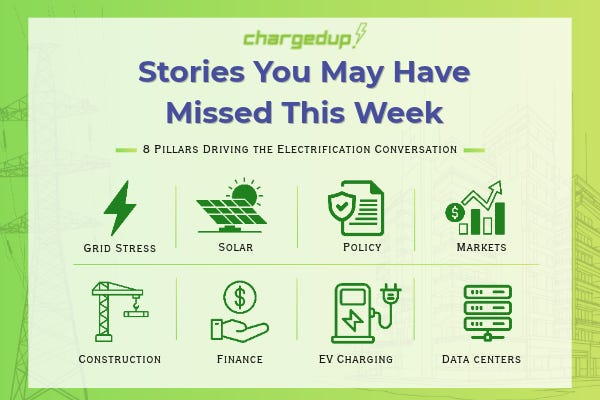
Grid Stress, Storms and Resilience Economics
Oil climbs back above $107 on a Gulf storm and Middle East attacks
Brent traded above $107 and WTI near $94 as a Gulf of Mexico hurricane shut in offshore production and tanker attacks continued in the Strait of Hormuz, even as exports recovered toward pre-conflict levels. For owners, the signal is continued fuel-price volatility heading into winter, concentrated in oil-linked fuels.
Sources: Trading Economics, Brent crude · EnergyNow, oil ends week higher as hurricane disrupts US Gulf production
Natural gas stays the anchor as production eases but Permian output holds
US natural gas production dipped on pipeline maintenance even as warm-weather cooling demand rose, yet strong Permian output kept Henry Hub near $3.20 per million BTU. Cheap, stable gas is the reason the broader power system has not spiked, and why gas-heated and electric buildings are insulated this winter.
Sources: Trading Economics, natural gas
Transformer and grid-equipment lead times stay stretched
High-voltage transformers and switchgear remain in short supply, with multiyear lead times that can strand a project even after it clears the interconnection queue. For developers, securing equipment is now a scheduling risk on par with financing and permitting.
Sources: Utility Dive, transformer supply bottleneck threatens grid as load grows · Manufacturing Mag, grid transformer shortage and three-year backlog
Electrification Economics at the Property Level
This winter’s fuel split cuts both ways: gas and propane users catch a break
While heating-oil costs climb, EIA’s winter outlook expects natural gas and propane households to pay about the same or slightly less than last year on full storage and ample supply. For owners, the divergence is a reminder that the fuel a building burns, not just the weather, sets the winter bill.
Sources: EIA, mixed outlook for energy expenditures this winter
Commercial electricity rates keep grinding higher
National commercial electricity rates continue to rise year over year as utilities recover grid-modernization spending and data-center demand lifts wholesale costs. The increase lands on commercial bills regardless of a building’s own consumption, making peak management and onsite generation the practical offsets.
Sources: U.S. Energy Information Administration, Short-Term Energy Outlook
Office distress climbs even as discount buyers circle
Office CMBS distress remains near record levels with a large share of maturing office loans troubled, yet cash buyers are stepping in at steep discounts. For those acquiring repositioning plays, energy retrofits that cut operating cost and lift net operating income are becoming part of the value-add playbook.
Sources: CRE Daily, cap rates may still have room to rise in 2026 · 24/7 Wall St, commercial real estate’s trillion-dollar refinancing wall
Solar, Storage and VPPs
ENERGYRE closes $815 million, a record South Carolina solar financing
ENERGYRE closed one of the largest solar-only financing packages in South Carolina history, a sign that capital for distributed and utility-scale solar remains available even as traditional real estate debt tightens. For owners, abundant project capital is what makes third-party-owned onsite power viable without upfront cost.
Sources: PR Newswire, ENERGYRE closes $815 million financing
Storage financing keeps flowing: GridStor and Permanent Power close new deals
GridStor secured $220 million and Permanent Power Company raised $600 million for solar-and-storage projects, part of a steady stream of capital into grid-edge assets. The volume signals that lenders and investors view distributed storage as a bankable, cash-flowing asset class.
Sources: Mercom Capital, GridStor secures $220 million · Mercom Capital, Permanent Power secures $600 million
Colorado’s Xcel virtual power plant advances under state mandate
Colorado law requires Xcel to run a performance-based virtual power plant program, and the utility’s advanced VPP, built with Itron and Tesla, continues to develop. For commercial owners in the state, it is another market where onsite flexibility can be compensated.
Sources: Utility Dive, Colorado law requires Xcel VPP with performance-based tariff · Itron, Xcel Energy to deploy advanced VPP in Colorado with Itron and Tesla
Policy and Market Rules
FERC directs Southwest Power Pool to revise its tariff for data centers
FERC ordered the Southwest Power Pool to revise its tariff to expedite data-center development, extending the federal push on large-load rules beyond PJM. The decisions shape how quickly, and on whose dime, large loads connect to the grid.
Sources: Akin Gump, FERC directs SPP to revise tariff for data center development
FERC’s large-load overhaul puts every data center over 20 MW in scope
FERC has directed grid operators to revise or justify how large loads connect, with the rulemaking reaching loads as small as 20 megawatts. The outcome determines cost allocation and interconnection timelines that ripple into commercial power prices.
Sources: White & Case, FERC orders grid operators to revise interconnection rules for large loads · Utility Dive, takeaways from FERC’s data center interconnection decision
The real commercial-solar deadline is December 31, 2027
The July 2026 construction-start safe harbor for the 30 percent commercial solar Investment Tax Credit has passed, and projects that missed it can still claim the credit only if placed in service by December 31, 2027. New sourcing and domestic-content rules compress timelines further, though storage retains a longer runway.
Sources: Internal Revenue Service, Clean Electricity Investment Credit · Native Solar, the 2026 ITC deadline for commercial solar
Local Governance and Federal Policy
Colorado regulators call Xcel’s grid data ‘totally useless’
Colorado regulators questioned whether Xcel will comply with demand-response and grid-transparency expectations tied to data-center load, calling the utility’s grid data inadequate. The dispute is a home-state window into the broader fight over data-center cost and transparency.
Sources: Energy-Storage.News, Colorado regulators question Xcel grid data
Data-center moratoriums keep spreading across states
More states and localities added moratoriums or restrictions on data-center development, driven by concerns over power demand, water use and rising bills. Entitlement and siting risk continues to climb for power-intensive projects.
Sources: Rockefeller Institute, more moratoriums on data centers · MultiState, voters target data centers with local and statewide ballot measures
Data centers emerge as a flashpoint in 2026 races
Data-center siting, power demand and tax incentives are becoming campaign issues in the 2026 races, adding political uncertainty to project timelines. For developers, local and electoral risk now sits alongside utility service as a gating factor.
Sources: The National Desk, data centers emerge as a flashpoint in 2026 races
EV Charging in Real Places
EV Realty opens its flagship 9-megawatt truck-charging hub
EV Realty brought its Inland Empire truck-charging hub online, with 76 ports and 9 megawatts on a major freight corridor, moving from land acquisition to operation. It underscores that power-equipped industrial land is becoming its own real estate asset class.
Sources: CCJ, EV Realty opens flagship truck-charging hub
A developer will build a 4-megawatt fleet-charging depot in the Bay Area
Renewable Properties announced a 4-megawatt fleet-charging depot in the San Francisco Bay Area, another example of real estate developers treating charging-ready sites as a product. For logistics landlords, charging capacity is becoming a leasing differentiator.
Sources: EV Infrastructure News, Renewable Properties to build 4 MW fleet charging depot
EV Market Signals
Used EV demand stays the steadier signal after the credit lapse
Recurrent’s latest report shows used electric vehicle demand holding as prices settle, a more durable signal than new sales following the September 30 federal credit expiration. Used EV owners are more likely to charge away from home, favoring multifamily, workplace and retail sites.
Sources: Recurrent, used electric vehicle buying report
US EV sales adjust, not collapse, after the credit ended
A year into the post-credit market and weeks after the latest expiration, US EV sales are adjusting rather than cratering, with the market finding a new level. Owners should underwrite charging to observed local utilization rather than national headlines.
Sources: OPB, one year after the end of the EV tax credit
Record diesel strengthens the fleet case for electrification
With retail diesel near record highs and EIA raising its outlook, the total cost of ownership math increasingly favors electric fleets. For logistics-adjacent property, that supports demand for onsite and depot charging.
Sources: DTN, ULSD futures and diesel market · U.S. Energy Information Administration, Short-Term Energy Outlook
Data Center Demand and Innovation
NRG advances a 1.2-gigawatt hyperscaler supply deal amid a Texas pause
NRG Energy continues to advance a roughly 1.2-gigawatt power supply deal with a hyperscaler even as Texas weighs slowing new data-center connections. Secured power, not land, remains the gating factor, which keeps onsite and behind-the-meter generation at a premium near data hubs.
Sources: Utility Dive, NRG nears 1.2-GW hyperscaler deal amid Texas pause
NERC forecasts peak demand up 24% over a decade on data-center loads
The North American Electric Reliability Corporation raised its 10-year peak-demand forecast by about 24 percent, driven overwhelmingly by new data-center load. The scale of the revision underscores why grid capacity, and the cost of it, will keep climbing for every connected building.
Sources: Utility Dive, NERC 10-year peak demand forecast jumps 24% on data center loads