

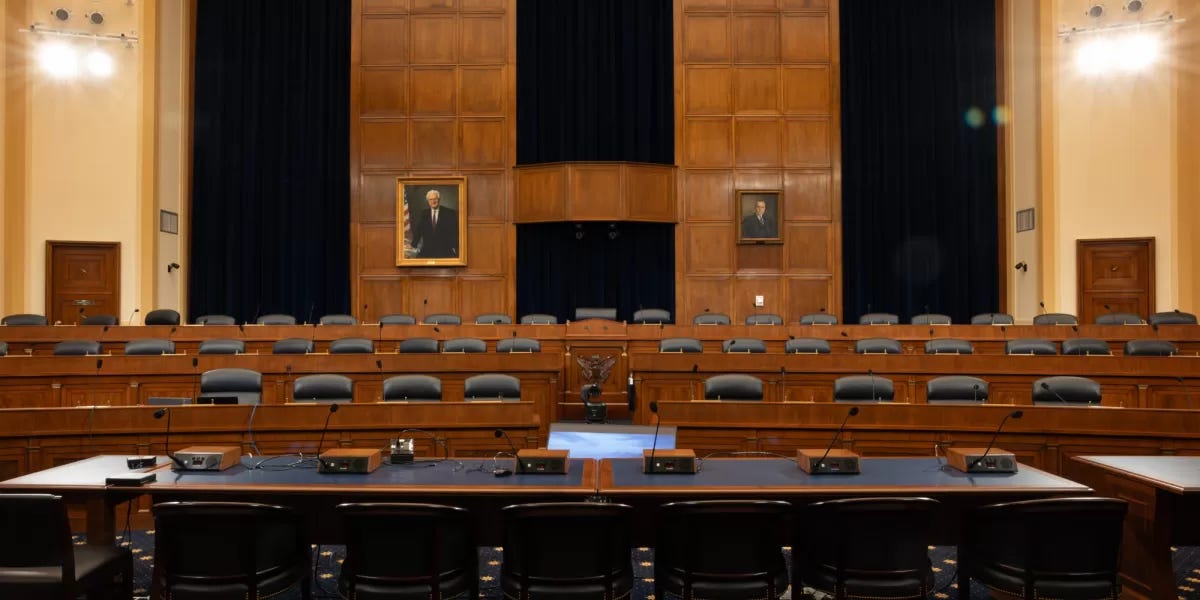
Elections changed the membership of utility commissions in Georgia, Arizona and Louisiana, the bodies that set electric rates and the rules for large new loads such as data centers. Several major decisions will be made by the outgoing commissions before new members are seated. Commercial owners should track pending rate cases and large-load tariffs, model fuel and capacity charges separately from base rates and participate through trade associations.
Key Takeaways
Georgia’s Public Service Commission (PSC) will have a 3-2 Democratic majority after Peter Hubbard and Sheila Edwards won statewide races.
Arizona voters elected Democrats Clara Pratte and Jonathon Hill to the Arizona Corporation Commission, adding two members to a body that has been all Republican.
Louisiana voters elected Republicans Stephanie Hilferty and John Atkins, widening the Republican majority on the Louisiana PSC.
Major decisions arrive before the new members take office: Louisiana plans a November 18 vote on Entergy’s plan for Meta’s Hyperion data center, and Arizona must rule on Arizona Public Service’s rate case by December 31.
Southern Company says it will hold base rates flat in Georgia and Alabama to at least 2029.
Who Won
Voters in three states, Georgia, Arizona and Louisiana, changed the membership of the commissions that set their electric rates, and in two of them the change came with a shift in party balance.
In Georgia, Peter Hubbard (D), who first won a seat in a 2025 special election, defeated former commissioner Fitz Johnson (R), and Sheila Edwards (D) defeated Josh Tolbert (R) for an open seat. The five-member PSC will have a 3-2 Democratic majority, the first in decades. “They are sick and tired of what’s going on,” Edwards said. Johnson urged the incoming commission to keep the safeguards he helped put in place and to maintain the state’s balanced energy mix.
In Arizona, the Associated Press called two seats on the Arizona Corporation Commission for Democrats Clara Pratte and Jonathon Hill over incumbent Kevin Thompson and state Rep. Ralph Heap, both Republicans. The change takes effect next year and adds two Democrats to a commission that has been all Republican. “With one-party control, you really risk an echo chamber effect,” Hill said during the campaign. Thompson had campaigned on an “all of the above approach” pairing renewables with natural gas and nuclear power.
In Louisiana, Republicans Stephanie Hilferty and John Atkins won open PSC seats by roughly 20 points or more, replacing a term-limited Republican and a term-limited Democrat and widening the Republican majority. Elsewhere, commission seats were on the ballot in Montana, Nebraska, North Dakota, Oklahoma and South Dakota, according to MultiState.
What Utility Commissions Control
State utility commissions approve the rates investor-owned utilities charge, the plans those utilities file for new power plants and the special tariffs for large customers. Most of the 50 states appoint their commissioners; only a minority elect them, which makes elections in those states a direct check on rates.
For commercial property, three kinds of decisions matter most. Rate cases set base rates and how costs are divided among residential, commercial and industrial customers. Resource plans decide how much new generation a utility builds and how it is paid for. Large-load tariffs determine whether data centers and other big new customers pay the full cost of the power plants and grid upgrades they require, or whether part of that cost spreads to everyone else.
Georgia: A Rate Freeze and a New Majority
Georgia’s base rates are frozen through 2028 under a 2025 agreement between Georgia Power and the PSC. Southern Company chief executive Chris Womack went further on November 5, saying the company is “committed to holding base rates flat in Alabama and Georgia to at least 2029.” The previous commission had approved six rate increases in recent years that added about $43 to the average monthly residential bill.
The commission also adopted rules in January 2025 for new large-load customers such as data centers. They allow longer contracts and minimum bills, aim to keep data centers paying for new infrastructure even if they leave the state and require Georgia Power to submit new data center contracts to the PSC at least 30 days before signing. In July 2025 the commission allowed Georgia Power to propose at least 6,000 MW of new generation.
The stakes are rising. Southern reported third-quarter commercial electricity sales up 10.1% and data center growth up 52% from a year earlier, and it projects $85 billion in five-year capital spending that could reach $100 billion. Who pays for that buildout is the central question the new majority inherits. Base rates are one part of the bill; fuel and other riders can still change during a freeze.
Arizona: A Rate Case Decided Before the Changeover
Arizona Public Service (APS) asked the commission for an average 14% increase, about $579 million in new revenue, with 6% to 8% increases for small, medium and large businesses and 45% for the data center class. APS also asked to move to formula rates, which would let it adjust rates each year for five years without a full rate case.
The hearing ended July 7. An administrative law judge is expected to issue a recommended order by late November, and the commission must vote by December 31, with new rates expected in early 2027. The current commission will make that decision before the new members are seated. Whether formula rates are adopted will shape how often Arizona businesses see rate changes for the next five years.
Louisiana: A Data Center Vote Before Swearing-In
Entergy Louisiana has asked the PSC to approve a $21.37 billion plan to build gas plants and infrastructure for a Meta data center in Richland Parish under a 20-year contract with a Meta subsidiary. The filing uses an expedited review process the commission adopted in December 2025. Entergy asked that the record be compiled without an administrative law judge’s formal recommendation. Commissioner Davante Lewis opposed that step, described the plan as including seven natural gas plants and asked to move the final vote to December, and consumer advocates warned that customers would carry the financial risk. The commission plans to vote November 18, before the new commissioners are sworn in.
What the Candidates Said
The winners campaigned on cost and oversight. Pratte said each utility expense should be necessary, justified and fair, and asked, “Are you using Arizona taxpayer dollars and consumer dollars in the most responsible, efficient way possible?” Both Pratte and Hill favor a diverse energy mix led by renewables, which they describe as the most cost-effective and fastest to build. Thompson helped the current commission repeal rules Republicans said raised consumer costs, including renewable energy requirements, and Heap argued for more support for coal.
In Georgia, the PSC races ran alongside a statewide sweep that included the governor’s office. Governor-elect Keisha Lance Bottoms campaigned on a temporary statewide moratorium on data centers, according to the Atlanta Journal-Constitution. Georgia Conservation Voters expects the new commission to push for more affordable, emission-free energy. Alabama, where Southern also operates, keeps an all-Republican commission.
In Louisiana, Verite News reported that Hilferty received more than $137,000 from people and groups connected to regulated utilities, according to WWNO. The new commissioners will weigh state policy that favors industrial investment against public concern over data centers and rate increases.
Implications, Opportunities and Risks for Owners
Implication: Large-load cost allocation is the issue to watch. In every state, the main question is how the cost of serving data centers is divided. Rules that assign those costs to large loads reduce the share spread to other customers, including commercial accounts.
Opportunity: Participate in proceedings. Owners can file public comments and join trade associations that intervene in rate cases. Commercial customers are often underrepresented compared with utilities, large industrial users and consumer advocates.
Opportunity: Lock in what you can. Where base rates are frozen, owners have a planning window to evaluate onsite generation and storage against known base rates.
Risk: Riders and fuel charges. A base rate freeze does not stop fuel cost and other adjustments. Budgets should model these separately.
Risk: Decisions made by outgoing commissions. Arizona’s rate case and Louisiana’s Hyperion vote will be decided before the new members take office, and their effects will last for years.
Frequently Asked Questions
Which utility commissions changed after the 2026 elections?
Georgia’s PSC will have a 3-2 Democratic majority, Arizona’s Corporation Commission adds two Democratic members to an all-Republican body and Louisiana’s PSC has a wider Republican majority.
Will Georgia electric rates go up?
Base rates are frozen through 2028, and Southern Company says it intends to hold them flat to at least 2029. Fuel and other adjustments can still change.
When will Arizona decide the APS rate case?
The commission must vote by December 31, 2026, with new rates expected in early 2027.
How can commercial property owners influence utility rates?
By filing public comments, joining trade associations that intervene in rate cases and tracking large-load tariff proceedings.
Sources
Arizona Corporation Commission. “What’s Next in the APS Rate Case.” July 10, 2026. https://azcc.gov/news/home/2026/07/10/what-s-next-in-the-aps-rate-case
Cronkite News. “On Top of a 14% Rate Increase, APS Asks Arizona Utility Regulators to Switch to Yearly Increases.” March 4, 2026. https://cronkitenews.azpbs.org/2026/03/04/on-top-of-a-14-rate-increase-aps-asks-arizona-utility-regulators-to-switch-to-yearly-increases/
Georgia Public Broadcasting. “Democrats to Take Control of Georgia Public Service Commission.” Nov. 4, 2026. https://www.gpb.org/news/2026/11/04/democrats-take-control-of-georgia-public-service-commission
Georgia Public Service Commission. “Data Center Fact Sheet.” Dec. 1, 2025. https://psc.ga.gov/site/downloads/datacenterfactsheet.pdf
KJZZ. “Democrats Jonathon Hill and Clara Pratte Win Seats on Arizona Corporation Commission.” Nov. 6, 2026. https://www.kjzz.org/elections/2026-11-06/democrats-jonathon-hill-and-clara-pratte-win-seats-on-arizona-corporation-commission-elex
KOLD. “Democrats Likely to Win 2 Open Arizona Corporation Commission Seats.” Nov. 5, 2026. https://www.kold.com/2026/11/06/democrats-likely-win-2-open-arizona-corporation-commission-seats/
MultiState. “State Utility Regulator Elections 2026.” Nov. 1, 2026. https://www.multistate.us/insider/2026/11/1/democrats-try-to-flip-utility-commissions-over-energy-costs
Southern Company via Finviz. “Southern Company Reports Third Quarter 2026 Earnings.” Nov. 5, 2026. https://finviz.com/news/416808/southern-company-reports-third-quarter-2026-earnings
The Atlanta Journal-Constitution. “Georgia PSC Changes Loom as Southern Posts Strong Earnings.” Nov. 6, 2026. https://www.ajc.com/business/2026/11/southern-co-profits-psc-changes/
WWNO. “Entergy Wants to Fast-Track $21B Meta Deal as PSC Commissioner, Advocates Sound Alarm.” April 14, 2026. https://www.wwno.org/local-regional-news/2026-04-14/entergy-wants-to-fast-track-21b-meta-deal-as-psc-commissioner-advocates-sound-alarm
WWNO. “Louisiana PSC Election Results: Hilferty Wins District 1 Seat, Atkins Wins in District 5.” Nov. 3, 2026. https://www.wwno.org/politics/2026-11-03/louisiana-psc-election-results-hilferty-wins-district-1-seat-atkins-wins-in-district-5