

Buildings with backup generators, batteries or flexible equipment can now earn money from the grid in several states. In New York, a school’s backup generator sells power into the wholesale market. New Jersey will pay $200 per kW for new batteries and pay businesses that cut use at peak. Owners typically enroll through an aggregator that handles dispatch, metering and market bids.
Key Takeaways
Strobe Power says a backup generator at a Staten Island charter school became the first New York City building generator to sell into the state’s real-time wholesale market.
On the summer’s most strained day, real-time prices reached $1,000 to $2,000 per MWh, and the generator ran in every scheduled interval, the company said.
New Jersey approved PowerUp NJ on November 12, paying $200 per kW for new residential and small commercial batteries and paying businesses to cut use at peak times.
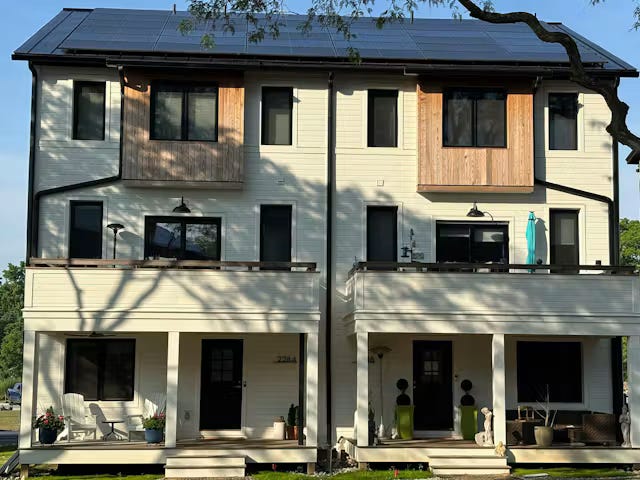
In Ann Arbor, a developer built 170 homes with batteries the utility can dispatch, DTE Energy’s first virtual power plant pilot in Michigan.
Generators that sell power must meet air permit rules, and owners should confirm emissions limits before enrolling.
A School Generator Becomes a Power Plant
$1,000 to $2,000. That is the range real-time power prices reached in New York City on the grid’s most strained day last summer, about 10 to 20 times a normal summer day, according to Strobe Power. On that day, a backup generator at New World Preparatory Charter School on Staten Island ran in every scheduled interval, including the system peak hour, and sold its output into the New York Independent System Operator (NYISO) real-time market.
Strobe Power, which manages the generator, says it is the first sale by a New York City building under NYISO’s distributed energy participation model. The generator follows dispatch signals updated every six seconds and also earns from Con Edison demand response and NYISO reserve markets, while still serving as the school’s emergency power. “Strobe makes our generator do both jobs,” said Angelo Aponte, chairman of the school. The school plans to add batteries, and Strobe is enrolling commercial, light industrial, hospitality and office properties across Con Edison’s territory.
The claims come from Strobe, and the company did not disclose the generator’s size or revenue. The economics depend on equipment, location and how often prices spike. The context is real: Strobe cites U.S. Energy Information Administration data showing New York commercial and industrial electricity prices rose about 19% from August 2024 to August 2026.
How a Building Joins the Market
NYISO launched its distributed energy participation model in 2024, calling it a first-in-the-nation effort to let aggregations of small resources bid into wholesale markets. Aggregations must exceed 10 kW. Con Edison lists four approved aggregators for its territory, including Strobe Power, CPower and Voltus. Combined resources must total at least 100 kW, sit in the same NYISO transmission node and support real-time monitoring by NYISO and Con Edison.
Owners can sell energy, capacity, ancillary services or all three. Customers on net metering or value stack tariffs must switch to Con Edison’s wholesale tariffs, and existing customers receiving capacity credits must sign up by August 1 to take effect the following May 1. Owners cannot collect the same capacity value from both the wholesale market and retail programs.
New Jersey Pays for Batteries and Peak Cuts
New Jersey took a different route on November 12. The Board of Public Utilities unanimously approved PowerUp New Jersey, which combines an interim virtual power plant program with the next phase of the state’s storage program. The four regulated utilities must launch programs by October 1, 2027, targeting a 547.1 MW reduction, or 3% of peak demand.
Payments are direct. New residential or small commercial batteries earn $200 per kW and existing batteries $100 per kW, adjusted for how much power they actually deliver. The first block covers 150 MW of new and 100 MW of existing storage, toward a goal of 2,000 MW by 2030. Businesses can enroll and be paid for cutting use at peak times with any method they choose. Board staff estimate a 3% peak cut could avoid about $60 million a year in capacity costs. “Residents and businesses can lend power from their homes,” said Gov. Mikie Sherrill.
A Developer Designs the Grid Into the Project
In Ann Arbor, Michigan, Thrive Collaborative built Veridian at County Farm so that all 170 all-electric homes carry sonnen batteries DTE Energy can dispatch directly. It is DTE’s first virtual power plant pilot in Michigan and took more than four years to negotiate. DTE pays upfront fees and annual payments for the rights to the network’s energy; the amounts were not disclosed. “We know affordability matters more than ever,” said DTE chief executive Joi Harris.
The project shows a developer treating grid services as part of the community’s design, and a utility treating a housing development as a resource. The same approach can apply to multifamily, campus and mixed-use projects in states with active programs.
The Details Behind New Jersey’s Program
The interim utility programs will run until September 30, 2029, when permanent versions replace them. They build on existing demand response programs and are designed to produce real-world data for a long-term framework. Eligible devices include thermostats, batteries, EV chargers and water heaters. The New Jersey Monitor reported that existing efficiency and EV charging devices could cover up to 82% of the 547.1 MW target if three-quarters of eligible devices enroll.
Regulators framed the program as a response to rising bills tied in part to data center demand. “We will develop this program carefully, learn from real-world results, and expand it over time,” said BPU President Ben Hertz-Shargel. For commercial owners, the most direct path is the business demand response option and the small commercial battery payments; larger systems will follow program rules as they are written.
Questions to Ask an Aggregator
Most owners will participate through an aggregator, so the contract terms decide the value. Owners should ask how revenue is split between the owner and the aggregator, how often and for how long equipment will run, and whether dispatch can conflict with tenant operations or emergency readiness. They should ask who pays for telemetry, metering and controls, who holds the air permit and emissions responsibility, and what happens if the equipment is unavailable when called. “Clearing the first bid in New York City shows a building can meet that standard,” said Keeley Erhardt, Strobe Power’s co-founder and chief executive. Meeting that standard every time is the aggregator’s job, and the contract should say so.
What It Means for Owners
Implication: Standby equipment can earn revenue. Generators and batteries installed for resilience can also earn energy, capacity and demand response payments and lower demand charges.
Opportunity: New Jersey storage payments. At $200 per kW, a 100 kW battery would receive a payment on the order of $20,000 before performance adjustments, under the program’s published rate.
Opportunity: Developer-level deals. Utilities will negotiate with developers who design dispatchable batteries into new communities.
Risk: Air permits and emissions. Diesel and gas generators that run for market sales face emissions rules that differ from emergency-only use. Confirm permits with the aggregator and state regulators before enrolling.
Risk: Program rules and timing. New Jersey’s utility programs launch by October 2027, and payment terms depend on performance. Wholesale prices vary year to year.
Frequently Asked Questions
Can a building’s backup generator sell power to the grid?
In New York, yes, through NYISO’s distributed energy participation model and an approved aggregator. Strobe Power says a Staten Island school generator made the first such sale by a city building.
How much does New Jersey pay for batteries?
$200 per kW for new residential or small commercial batteries and $100 per kW for existing ones, adjusted for performance, under PowerUp New Jersey.
Who handles market participation?
Aggregators such as Strobe Power, CPower and Voltus manage dispatch, telemetry and bids for building owners.
What are the risks?
Air permit limits on generators, changing program rules and variable market prices.
Sources
Con Edison. “Join the Wholesale Market With Distributed Generation.” Accessed Nov. 16, 2026. https://prodcde10.coned.com/en/save-money/using-distributed-generation-energy-sources/join-the-wholesale-market-with-distributed-generation
EnergyTech. “NYC School Generator Becomes Wholesale Market Resource Under NYISO Program.” Nov. 12, 2026. https://www.energytech.com/distributed-energy/news/55418451/nyc-school-generator-becomes-wholesale-market-resource-under-nyiso-program
Microgrid Knowledge. “DTE Energy and sonnen Bring Michigan’s First Residential Battery VPP to Life.” Nov. 13, 2026. https://www.microgridknowledge.com/distributed-energy/virtual-power-plant/article/55418951/dte-energy-and-sonnen-bring-michigans-first-residential-battery-vpp-to-life
New Jersey Monitor via Yahoo News (Nikita Biryukov). “NJ Regulators Approve Virtual Power Plant, Battery Storage Programs.” Nov. 12, 2026. https://www.yahoo.com/news/us/articles/nj-regulators-approve-virtual-power-201821676.html
New York Independent System Operator. “NYISO Implements Nation’s First Market Empowering Distributed Energy Resources.” April 18, 2024. https://www.nyiso.com/-/press-release-nyiso-implements-nations-first-market-empowering-distributed-energy-resources
ROI-NJ. “NJBPU Program Would Reward Residents and Businesses for Using Smart Devices to Help Power the Grid.” Nov. 13, 2026. https://www.roi-nj.com/2026/11/13/industry/energy-utilities/njbpu-program-would-reward-residents-and-businesses-for-using-smart-devices-to-help-power-the-grid/
Strobe Power via GlobeNewswire. “Strobe Power First to Commission a New York City Building as a Power Plant Under NYISO’s DER Participation Model.” Nov. 12, 2026. https://www.globenewswire.com/news-release/2026/11/12/3401616/0/en/strobe-power-first-to-commission-a-new-york-city-building-as-a-power-plant-under-nyiso-s-der-participation-model.html